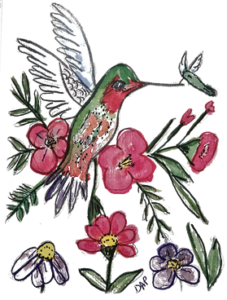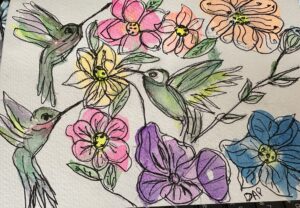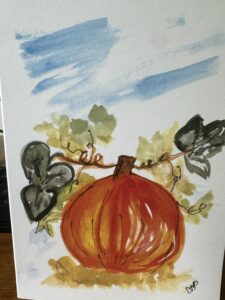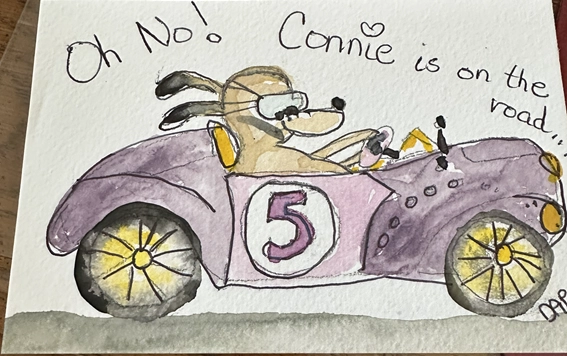
People sometimes ask Debra when she became an artist. The honest answer is that she has always been one — but she didn't always have the name for it, and she didn't always have the time to act on it fully. What she had, for decades, was a parallel life: one in the classroom and the administrator's office, one at the studio table. Both of those lives made her who she is. Neither one of them is over.
This is the story of how they connect.
The Education That Came First
Debra's background is in education — not as a subject she studied briefly and left behind, but as a vocation she pursued with the kind of depth and duration that reshapes a person. She worked as a teacher, as an administrator, in roles that required her to think carefully about how people learn, what they need to flourish, and what it means to build an environment where growth is possible.
These are not abstractions when you've spent years doing the work. They become specific: the student who needed a different approach, the system that was failing people who deserved better, the moment when the right word or the right question changed something for someone. Debra gathered thousands of these moments over her career. They became part of how she sees the world.
Art as a Parallel Practice
Throughout her career in education, Debra kept returning to art. Not as a break from her "real" work — as a practice that ran alongside it, informed it, and sustained her in it. She grew up in a family that valued beauty and creativity. She studied art formally at various points in her life. She painted when she could, read about painting when she couldn't, and looked at the work of other artists with the same careful attention she brought to everything she cared about.
This is different from picking up a brush in retirement. By the time Debra began developing the Hummingbird Whispers collection, she had been a student of watercolor for years — not as a hobbyist, but as someone serious about the craft. The learning curve had been climbing for a long time before the collection took shape.
- Patience with process. Educators know that mastery takes time and that early results are rarely representative of eventual capability. Debra applied this understanding to her own development as an artist — pushing through the difficult early period without abandoning the practice.
- Attention to the learner's experience. Years of thinking about what makes something understandable, meaningful, and lasting shaped how Debra thinks about what makes a card work. Who is this for? What do they need from it? What will they feel when they open it?
- Commitment to standards. Debra's professional life was built on the belief that standards matter — that the quality of what you offer reflects the respect you have for the people you're offering it to. That belief is directly present in every painting she signs.
- A sense of purpose beyond the product. The Hummingbird Whispers giving mission — 10% of every sale donated — reflects the same orientation toward service that defined her career in education. The cards are not just products. They are acts of intention.
The Decision to Build the Collection
Hummingbird Whispers was not a sudden pivot. It was the natural convergence of everything Debra had been building — professionally, artistically, personally — for decades. The name came from the bird she had returned to again and again in her paintings: the hummingbird, with its associations of presence, lightness, and the capacity to find something beautiful even in the middle of difficulty.
The giving mission was built in from the beginning because it could not have been otherwise. A career in education is, at its core, a career in service — in the belief that what you do should make things better for other people. Taking that orientation out of her work when she moved from the classroom to the studio table was never a consideration. The question was only how to express it in a new context.
The answer was straightforward: 10% of every card sold goes to mindfulness and gratitude initiatives. Not when the business grew large enough. From the first card. Because that is what a life of purpose looks like in practice.
What the Two Careers Share
The distance between education and art is shorter than it might appear. Both are fundamentally about communication — about finding the form, the image, the arrangement of elements that allows something true to cross from one person to another. Both require patience, precision, and the willingness to look carefully at what isn't working and try again. Both are sustained by the belief that the person on the receiving end deserves your best effort.
Debra's cards carry all of this. Not because she worked to put it there — because it was already present in who she is, formed by decades of work in a field that demanded exactly these qualities. The classroom and the studio are different places. The person who walks between them is the same.
On what she hopes the cards communicate
"I want someone to hold one of my cards and feel that it was made with intention. Not manufactured at scale, not assembled from stock elements, but painted by someone who was thinking about the person who would eventually receive it. That's what I was trying to do as a teacher too — to meet each person where they were and give them something that was genuinely meant for them. The medium is different. The impulse is the same."
Still Learning
One of the things that an education career teaches you, if you're paying attention, is that the best teachers are always also students. Debra brings this to her painting. She continues to develop her technique, to study other watercolorists, to paint subjects that challenge her and push against the edges of what she currently knows how to do. The collection grows as she grows.
This means the cards you find at Hummingbird Whispers today are the work of an artist who has been practicing seriously for years and who is still actively developing. The designs in the collection are not the best she will ever paint. They are the best she has painted so far — and that distinction matters to her.
To read more about Debra's full background and the life that preceded the collection, visit the About Debra page. To see the full watercolor process behind each design, read the Watercolor Art Process guide. And to understand the giving mission that connects her two careers — education and art — read more about Our Giving Mission and the Cards That Give Back.
The complete Hummingbird Whispers collection is the ongoing work of this journey — original watercolor designs, made with intention, by someone whose entire career has been preparation for making them.
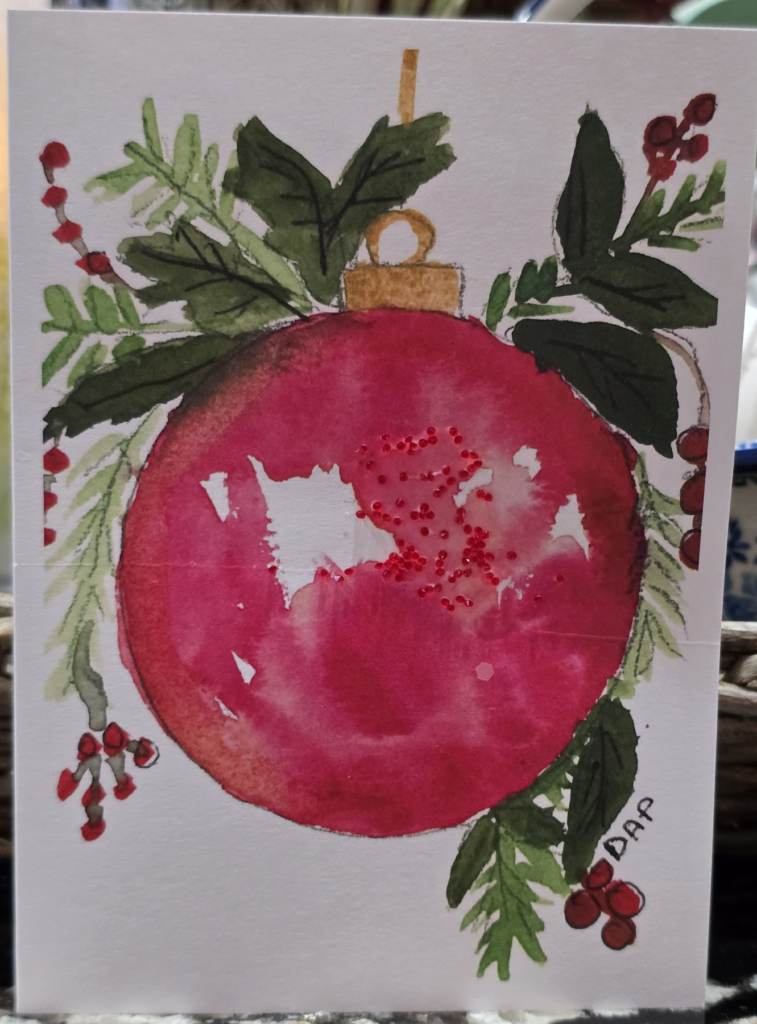
WRITTEN BY
Debra
- Artist, educator, and founder of Hummingbird Whispers. Debra paints original watercolor cards as acts of intention, each one made to be shared.
Greeting Card Ideas
Guides for every occasion
Debra's Art Studio
Behind the watercolor process.
Gratitude & Giving
Why every card gives back
ORIGINAL WATERCOLOR CARDS” — 10px, Jost 500, uppercase, letter-spacing 3px, color #d4b483
Send something that carries meaning.
Hand-painted by Debra. 10% of every purchase supports mindfulness & gratitude initiatives.