At some point in the last decade, we quietly agreed — as a society — that a text message was sufficient. A birthday could be acknowledged with a string of emojis. A condolence could be expressed through a comment on a Facebook post. An anniversary could be marked by a reaction to someone's photo. We told ourselves this was efficiency. That connection was connection, whatever form it took.
There is something true in that. Digital expressions of care are not meaningless. They keep us woven into each other's lives across distances and time zones in ways that would have seemed extraordinary to previous generations.
And yet. There is something that a physical card does — that has always done — that no digital message can replicate. Something that researchers in psychology and neuroscience have been quietly documenting for years while the rest of us sent birthday texts and called it good enough.
What Happens When Someone Receives a Card
Research on gratitude, social connection, and physical mail consistently surfaces two counterintuitive findings. The first is that senders dramatically underestimate how much a handwritten note will mean to the person who receives it. The second is that they overestimate how awkward it will feel to send one.
A study published in Psychological Science found that people who sent "thinking of you" notes to someone they hadn't been in touch with rated the experience as significantly less awkward than they'd predicted — and recipients rated the experience as significantly more meaningful than the sender had expected. The math almost always works out in favour of sending.
People consistently underestimate how much a handwritten note will mean. The gap between what the sender thinks they're giving and what the receiver actually experiences is large — and it always favors sending.
The Physical Object Does Something the Screen Cannot
When you receive a text or an email, the message arrives in a stream with other messages. It exists in the same space as promotions, notifications, work emails, and everything else competing for your attention. It is, by design, part of a feed.
A card arrives differently. It appears in a physical space — a mailbox, a door slot, a surface where someone placed it. It has to be picked up. Held. Turned over. Opened. The physical act of interacting with it is itself a form of attention that the digital world simply does not require.
A digital message arrives in a feed with dozens of others, is read in seconds often while doing something else, disappears upward as new messages arrive, requires no physical act to receive, and leaves no lasting physical trace. A physical card arrives alone in its own envelope addressed by hand, requires being picked up and opened, stays where it's placed — on a shelf, a nightstand, a fridge — is reread sometimes years later, and becomes part of someone's physical space and memory.
The Signal of Effort
This is perhaps the most important thing a physical card communicates, and it communicates it before a single word is read: someone went out of their way.
They found a card they thought was right. They wrote something in it — with a pen, by hand, which is harder and slower than typing. They addressed an envelope. They found a stamp. They mailed it. Each of these steps is a small additional signal: you were worth this.
In an environment where most expressions of care require nothing more than a thumb movement, the decision to do something that takes time and physical effort carries an entirely different weight. This is not a signal that can be faked or shortcut. You either sent a card or you didn't.
Why a watercolor card amplifies this effect
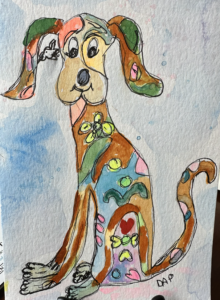
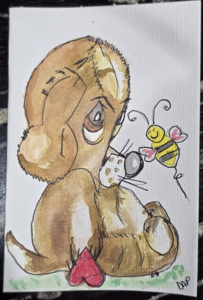
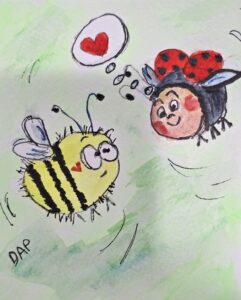
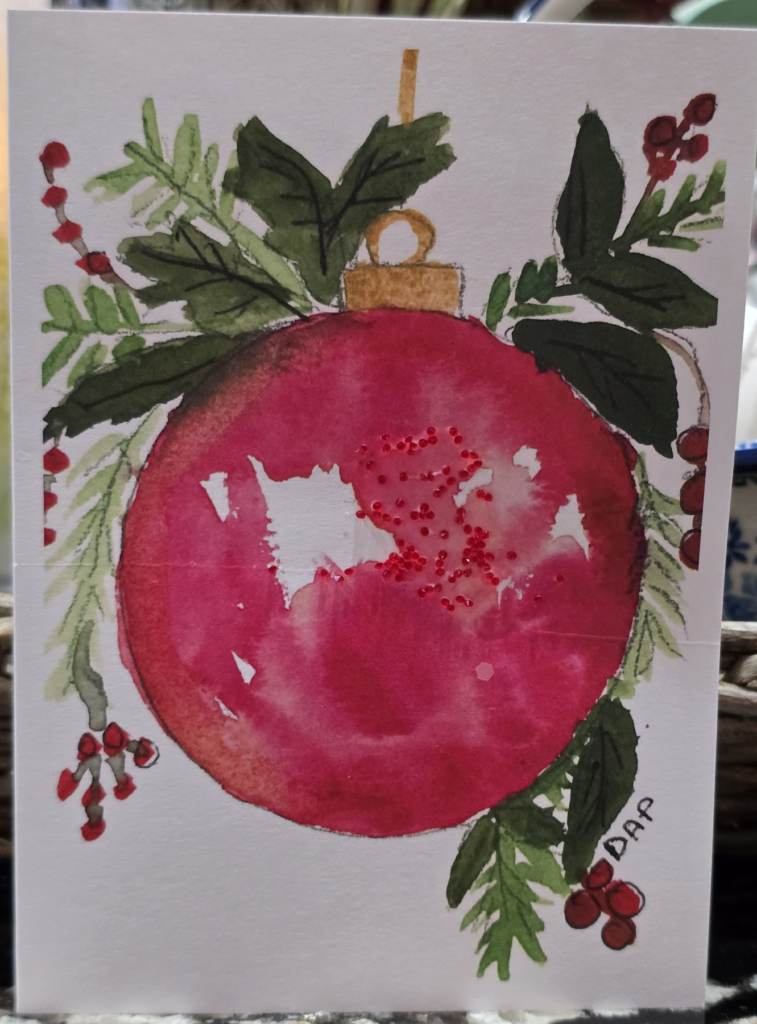
A mass-produced card sends the effort signal at a baseline level — someone bought it, wrote in it, mailed it. An original watercolor card, like those in the Hummingbird Whispers collection, adds a second layer to that signal: someone chose something that was made by a specific person, with specific intention, as an original act of creativity. The recipient may not be able to articulate this difference. But they feel it.
Cards Are Kept. Messages Are Not.
Ask anyone who has lost someone they loved what they kept. Almost no one says: the text messages. The emails. The Facebook posts. People keep letters. They keep cards. They keep the physical objects that prove someone was thinking of them on a specific day, held a pen in their hand, and said something true.
This is not nostalgia. This is how memory works. Physical objects anchor moments in a way that digital messages — frictionless, infinite, and largely undifferentiated — simply cannot. A card kept in a drawer for twenty years is not kept out of habit. It's kept because something about it still matters, every time it's found again.
The Occasion Doesn't Have to Be Special
One of the most underused aspects of greeting cards is their capacity to mark moments that don't have a designated holiday. A card sent for no occasion — "I was thinking of you, and I wanted to say so" — is often more meaningful than a card sent because the calendar required it.
This is especially true of the Thinking of You cards in our collection. A card sent without an occasion attached tells someone that you thought of them when you didn't have to. That spontaneous, unobligated thought is one of the most human expressions of care that exists.
And because it is increasingly rare — because most of us have defaulted to the text, the emoji, the comment — it carries even more weight than it would have in any previous era. The bar for being remarkable is lower than it's ever been. All it takes is a card, a stamp, and the decision to actually send it.
How to Start the Habit
The most common reason people don't send cards isn't that they don't care. It's that they don't have cards on hand, and the gap between the impulse and the action is wide enough that the impulse fades before anything is sent.
- Keep a small stock of cards at home. Four or five cards covering different occasions means the gap between impulse and action is small. You have a card. You write it. You send it the same day.
- Set aside five minutes. Writing a meaningful card doesn't require an hour. Name the moment, say one specific thing, close with warmth. Three sentences. Five minutes, at most.
- Keep stamps. This sounds obvious and is frequently overlooked. A card that sits on a surface because there's no stamp in the house is a card that doesn't get sent.
- Do it when you feel the impulse. The impulse to reach out to someone is itself meaningful information. Act on it while it's present. The card you send will be kept. The text you send instead will last thirty seconds in a feed.
Browse Debra's full watercolor card collection to keep a few on hand. Each one is hand-painted as an original — and 10% of every purchase goes toward mindfulness and gratitude initiatives, making the act of sending a card an act of giving back as well.
WRITTEN BY
Debra
- Artist, educator, and founder of Hummingbird Whispers. Debra paints original watercolor cards as acts of intention, each one made to be shared.
Greeting Card Ideas
Guides for every occasion
Debra's Art Studio
Behind the watercolor process.
Gratitude & Giving
Why every card gives back
ORIGINAL WATERCOLOR CARDS” — 10px, Jost 500, uppercase, letter-spacing 3px, color #d4b483
Send something that carries meaning.
Hand-painted by Debra. 10% of every purchase supports mindfulness & gratitude initiatives.